Warkworth to Whangārei
Exterior stone lives in the worst of the Northland coast — salt, UV, wind-driven rain and big daily temperature swings. Whether it’s a clad elevation or a stone sett driveway, this work is engineering first, aesthetics second.
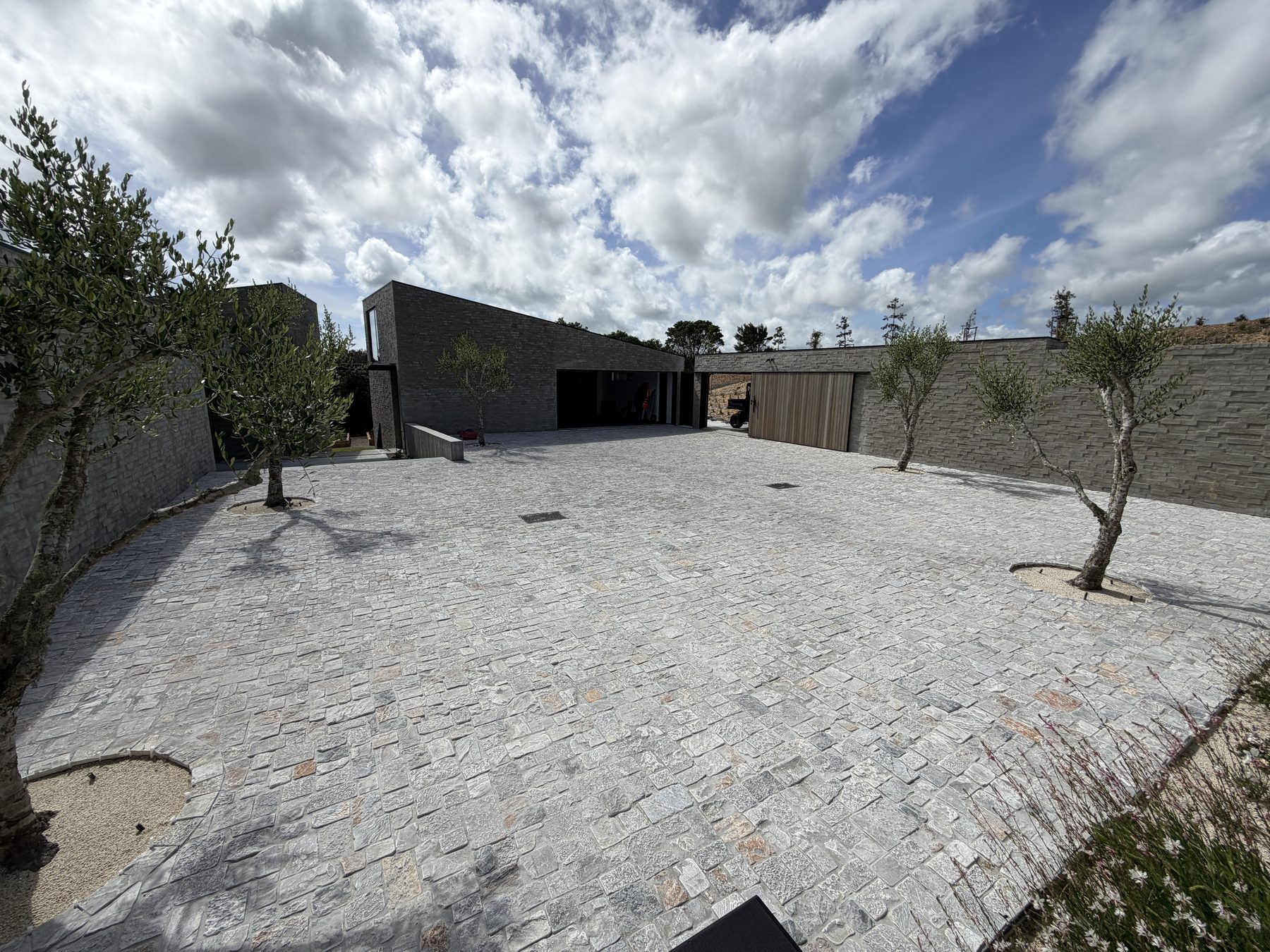
An exterior stone facade moves. The substrate expands and contracts, the stone heats and cools at a different rate, and a system that ignores this fails — usually a few years in, usually expensively. Our facade installations start with an assessment of the substrate and the stone together: absorption, weight, thermal behaviour and exposure. From there we specify the adhesive system, reinforcement and movement joints that let the whole assembly breathe, achieving a permanent bond without visible mechanical fixings.
Our facade specifications are written to meet manufacturer warranty requirements — the same discipline we bring to swimming pools — and our natural stone experience runs from schist and basalt panels to full rock-finish features on coastal homes.
| Assessment | Substrate + stone thermal & weight analysis |
| Preparation | Reinforced render / board rated for exterior |
| Adhesive | Exterior-rated, deformable, matched to stone |
| Movement | Designed joint layout for thermal cycling |
| Exposure | Coastal zone durability throughout |
| Fixing | Fully adhered — no visible mechanical fixings |
Range
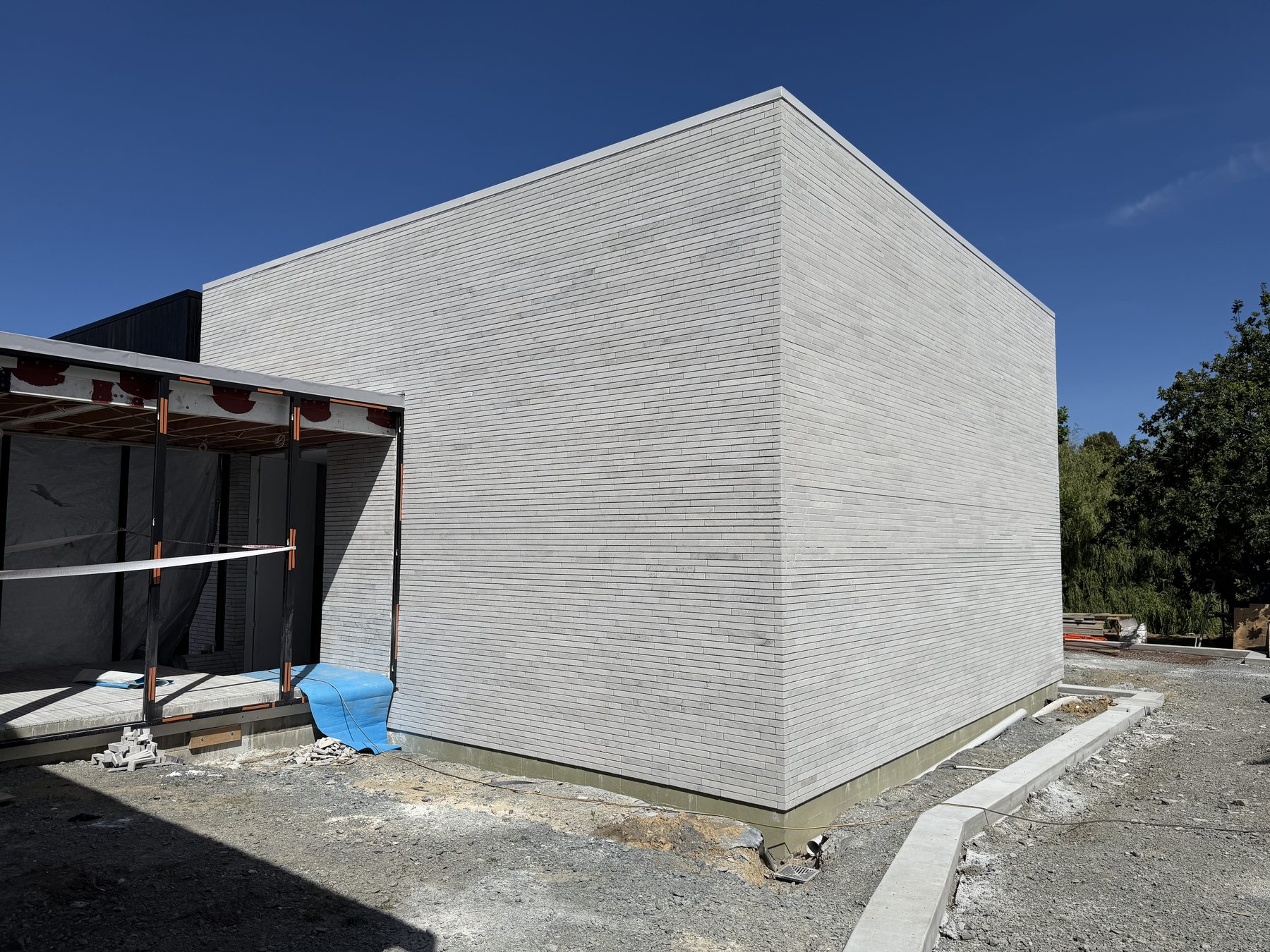
Linear cladding
Fine-format natural stone laid dead straight across full elevations — precision at architectural scale.
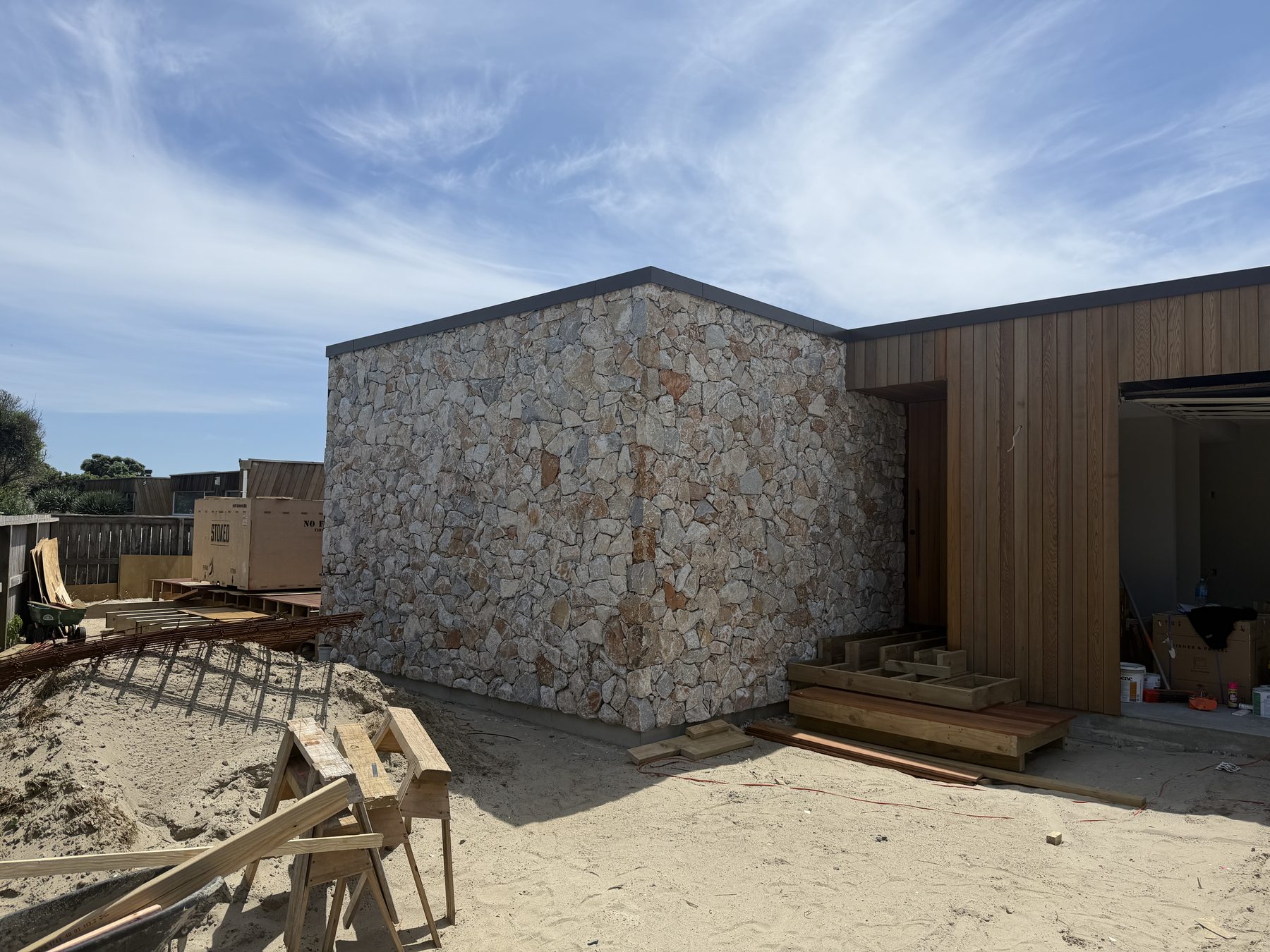
Random rubble
Traditional random-laid stone against cedar — coastal exposure, fully adhered, no visible fixings.
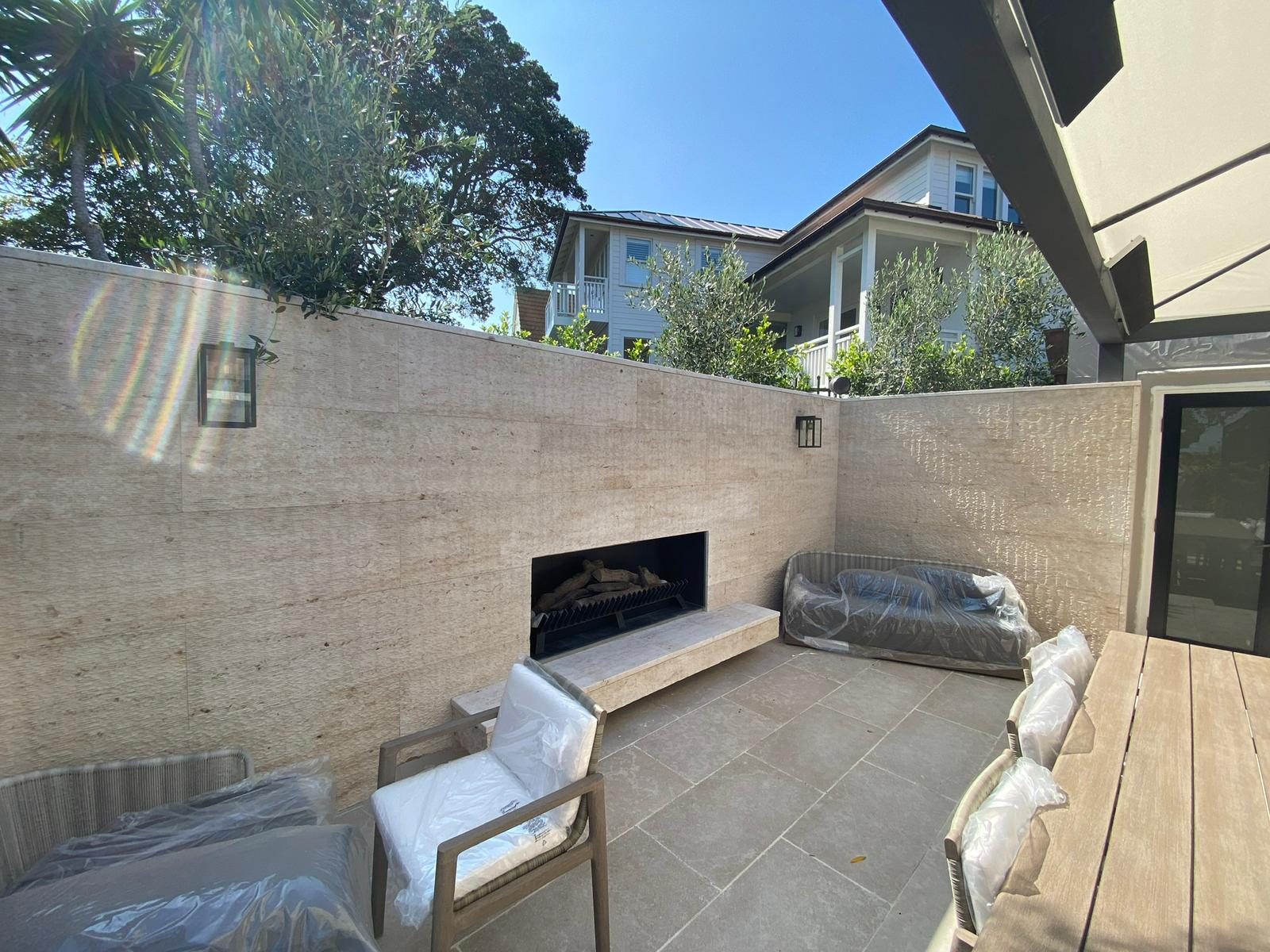
Outdoor living
Travertine walls and paving around a built-in fire — stone as the room itself.
Call for straight answers on systems, timing and budget — or send photos and measurements for a fast estimate.
